Welcome to Hawatel's blog!
December 17, 2025 | General / Cyber security / Infrastructure management
Web Application Firewall: Why is protecting web applications so important today?
Web applications are the heart of many businesses. Whether it’s simple websites, complex e-commerce platforms, or banking systems, they are all exposed to cyberattacks. As the number of users and data on the internet grows, so does the activity of cybercriminals. Attacks such as SQL Injection, Cross-Site Scripting (XSS), or DDoS have become everyday challenges for IT administrators.
That is why more and more organizations are choosing to implement a Web Application Firewall (WAF) — an application firewall that provides one of the most effective layers of protection against attacks targeting web applications.

What is a Web Application Firewall (WAF)?
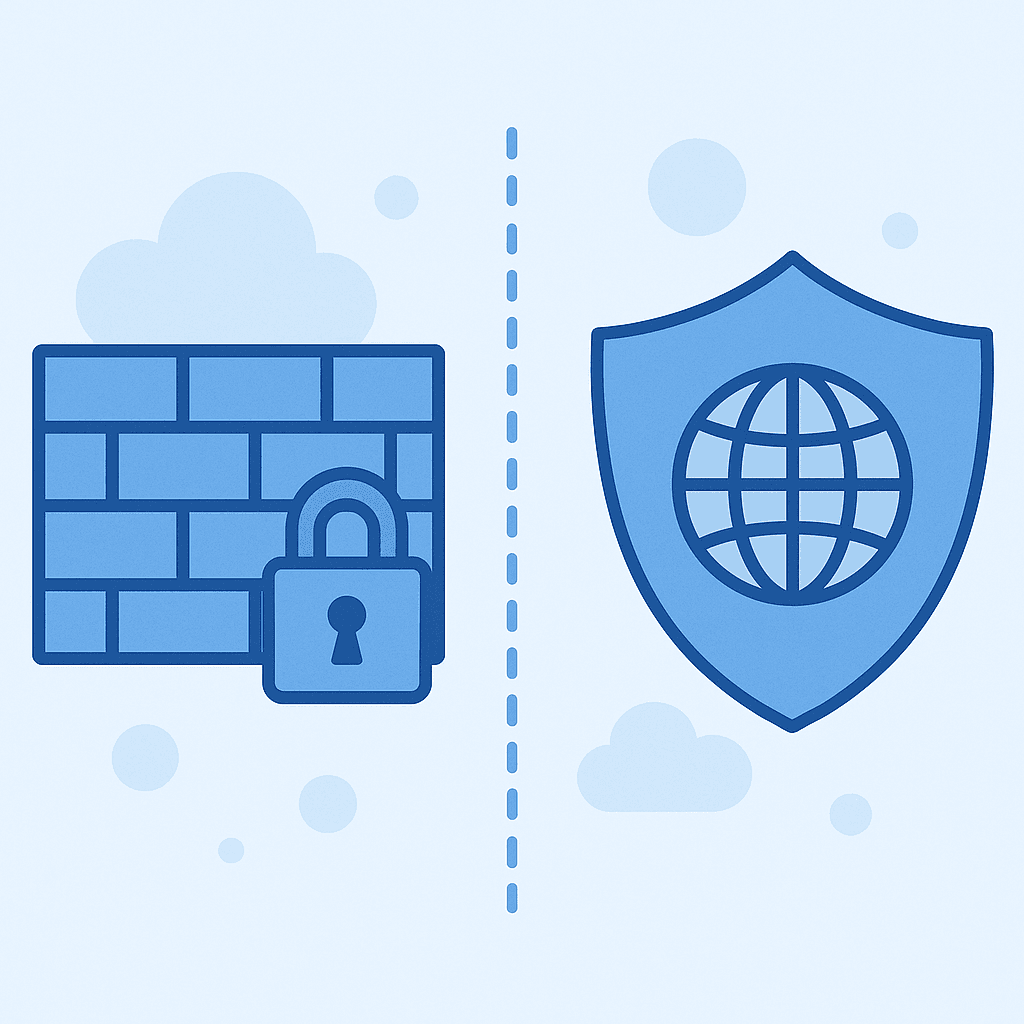
A Web Application Firewall is a specialized security system that monitors and filters network traffic between a web application and its users. Unlike traditional firewalls that protect network infrastructure, a WAF focuses on the application layer (Layer 7 of the OSI model) — where most vulnerabilities exploited by hackers are found.
In practice, a WAF analyzes all HTTP and HTTPS requests directed to the application. Based on security rules, it can:
- allow requests if they are safe,
- block them if suspicious patterns are detected,
- log them if they require further analysis.
Modern application firewalls can detect even complex attacks using machine learning, behavioral analysis, and real-time threat signature updates.
What types of attacks does a WAF block?
The greatest advantage of a Web Application Firewall is its ability to protect against a wide variety of threats. Typical attacks that a WAF can effectively detect and block include:
- SQL Injection – attempts to inject SQL code into forms and queries,
- Cross-Site Scripting (XSS) – injecting malicious scripts into web pages,
- Cross-Site Request Forgery (CSRF) – hijacking user sessions,
- Remote File Inclusion (RFI) and Local File Inclusion (LFI) – unauthorized access to files,
- Brute Force and DDoS – server overload or password cracking through repeated attempts.
Thanks to these capabilities, web applications remain resilient even to new types of threats that emerge every day.

Types and architecture of WAF
A WAF can be deployed in several models, depending on the company’s needs and infrastructure:
- Cloud-based WAF – a flexible, provider-managed solution, easily integrated with services such as AWS WAF, Azure Front Door, or Cloudflare.
- Hardware appliance WAF – a dedicated device installed in a data center.
- Software WAF – deployed locally or in containers, offering full configuration control.
In recent years, cloud and hybrid solutions have gained the most popularity, combining effective protection with scalability and automatic security rule updates.
Benefits of implementing a Web Application Firewall
A well-configured Web Application Firewall not only protects against attacks but also improves the quality and stability of application performance.
Companies that implement WAFs achieve a higher level of security by effectively protecting customer data and system integrity. They also ensure compliance with legal and industry standards such as PCI-DSS, GDPR, or ISO 27001. Moreover, faster response to threats reduces security incident costs and minimizes the risk of application downtime. A WAF also enhances visibility and control over network traffic, allowing detailed analysis of requests directed to the application.
For companies developing cloud solutions or running online operations, an application firewall has become an essential element of IT security strategy.

Web Application Firewall and other security solutions
A WAF does not replace traditional network firewalls, IDS/IPS systems, or antivirus software — it complements them. While a traditional firewall protects the infrastructure and antivirus systems secure endpoints, a Web Application Firewall focuses on application logic, where programming errors and exploit attacks most often occur. It is the layer that completes the entire application security model.
WAF in practice – how does Hawatel do it?
The Hawatel team has been helping companies for years to implement effective web application security strategies. Our services include:
- designing WAF architecture tailored to the client’s infrastructure,
- configuring security rules customized for specific applications,
- integrating with cloud systems,
- monitoring and responding to incidents 24/7.
Our goal is not only to protect against threats but also to ensure business application continuity — so your company can grow without the risk of downtime or data loss.
Summary
In an era when every web application is a potential attack target, a Web Application Firewall has become a crucial part of any IT security strategy. It protects data, brand reputation, and business continuity.
A WAF should be viewed not as an additional cost, but as an investment in stability and user trust.