Welcome to Hawatel's blog!
January 21, 2026 | General / Infrastructure management / Monitoring
Effective IT infrastructure management. 9 proven ways to keep order, security, and predictability in your organization
Effective IT infrastructure management is not only about choosing tools, but also about the way of thinking about processes, responsibility, and order within the organization. Technology without rules is chaos at an accelerated pace.
Here are nine proven methods that help companies maintain order, security, and predictability.

1. Introduce security and access policies – not everyone needs to see everything
The stability of IT infrastructure begins with clearly defined rules. Companies often focus on hardware and software, forgetting about the simplest thing: who has access to what and why. Well-designed security policies define roles, permission levels, and methods of user authorization.
It is worth applying the least privilege principle – the minimum necessary permissions – and regularly reviewing accounts and passwords. It may seem tedious and time-consuming, but it is certainly cheaper to introduce this procedure than to fix the consequences of a security incident.
2. Standardize procedures – every problem should have its own instruction
In mature organizations, IT infrastructure runs smoothly not because “the admin remembers everything,” but because there are operational procedures. Backup, restart, configuration change, update – each of these processes should be described, repeatable, and verified.
Well-prepared procedures:
- shorten reaction time in a crisis,
- make onboarding of new employees easier,
- reduce the risk of human error.
It is documentation and procedures that distinguish IT management from improvisation.
3. Measure, report, and improve IT processes
You cannot improve something you do not measure. Regular reporting on the state of infrastructure – failures, availability, response time, performance – allows decisions to be made based on data, not intuition.
A good practice in IT infrastructure management is to periodically review reports provided by implemented tools and discuss them within the team. Such meetings are not bureaucracy – they are the moment when IT actually becomes part of the company’s strategy.

4. Monitor everything – before something breaks (Zabbix + Grafana)
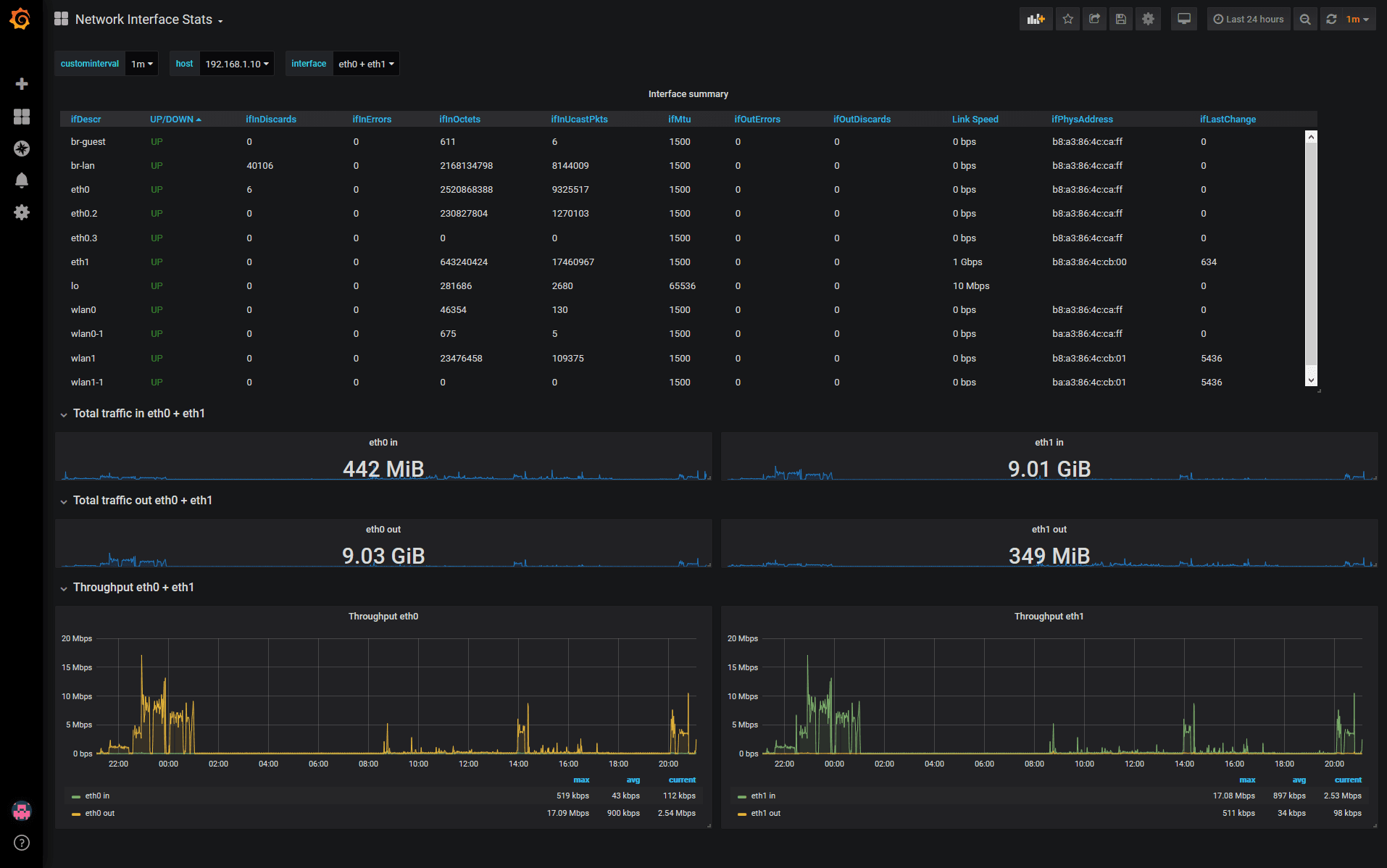
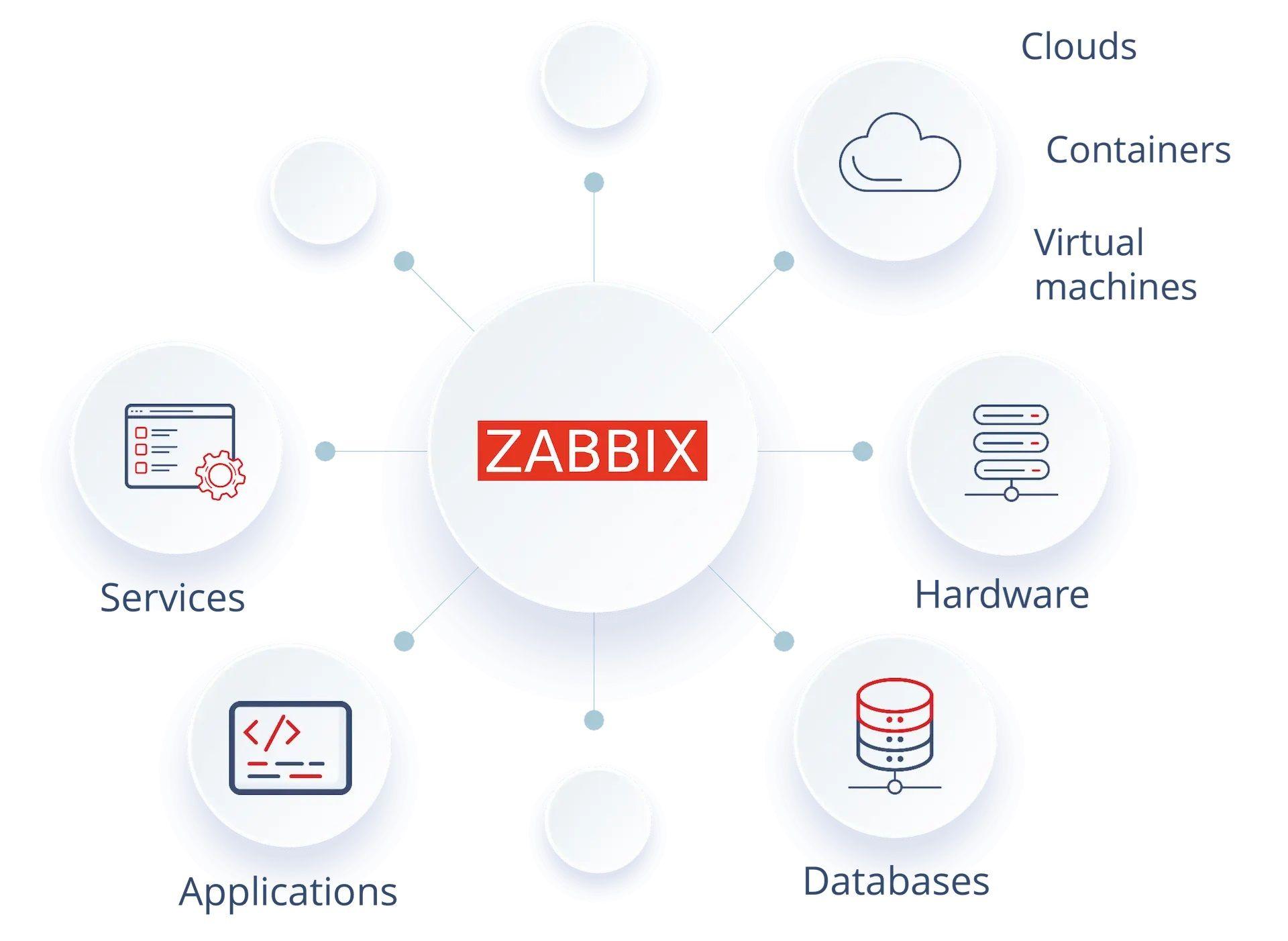
As already mentioned above, you cannot improve, let alone manage, something you cannot see. Monitoring is the foundation of IT infrastructure management. At Hawatel, we use Zabbix for full observability of systems, networks, and applications. Thanks to it, anomalies can be quickly detected and problems solved before they affect users.
We combine Zabbix data with visualizations in Grafana, which provides clear dashboards and real-time reports. This way, the administrator sees everything in charts.
5. Automate routine tasks – gain time for important things
Manual server management is a recipe for chaos and errors. Process automation – from deployments to backups – allows maintaining stability and reacting quickly to changes.
This is the essence of modern IT infrastructure management: systems operate according to schedule, without the risk that someone forgets to click the right option.

6. Introduce an ITSM system – order in processes (GLPI)
Without a ticket management tool, even the best IT team will drown in emails. The GLPI system, compliant with ITSM principles, organizes the entire handling of incidents, changes, and assets. Every problem has an assigned owner and a full history of actions, and integration with Zabbix means that tickets are created automatically after an error is detected.
The result: transparency, control, and the data needed for real optimization of IT department work.
7. Document and analyze – without knowledge there is no stability
Good documentation is not a whim but a survival tool. An up-to-date configuration database (CMDB) and a description of dependencies between systems allow avoiding mistakes and speeding up reactions during a crisis.
Systems like GLPI have built-in CMDB modules, thanks to which you can finally know what connects with what – and what will fail if you touch server X.
8. Think strategically – don’t put out fires, prevent them
Managing IT infrastructure is not about fighting failures but preventing them. Regular audits, security tests, and trend analysis from monitoring help detect weak points before they become costly problems.
A proactive approach makes infrastructure work predictably, and the company no longer lives in a “constant alarm” mode.

9. Detect threats and respond automatically – with Wazuh (XDR)
IT security today is more than just antivirus and firewall. Wazuh is an XDR (Extended Detection and Response) class system that monitors system activity, detects suspicious events, and automatically responds to threats.
Thanks to integration with tools such as Zabbix and Grafana, Wazuh provides a full picture of security – from system logs to user activity. It allows central analysis of data from many sources and immediate actions: blocking suspicious processes, sending alerts, creating incidents in GLPI.
It is not only a SOC tool – it is real support in everyday IT infrastructure management, helping protect the company without expanding the army of administrators.
Summary
Effective IT infrastructure management requires a combination of technology, procedures, and common sense. Zabbix, Grafana, GLPI, and Wazuh create the technological foundation, but it is policies, processes, and data analysis that make the whole system work predictably.
At Hawatel, we implement these solutions comprehensively – from tools to structured processes.
Would you like to see what IT infrastructure management could look like in your company? Contact us – we offer a consultation and environment analysis.